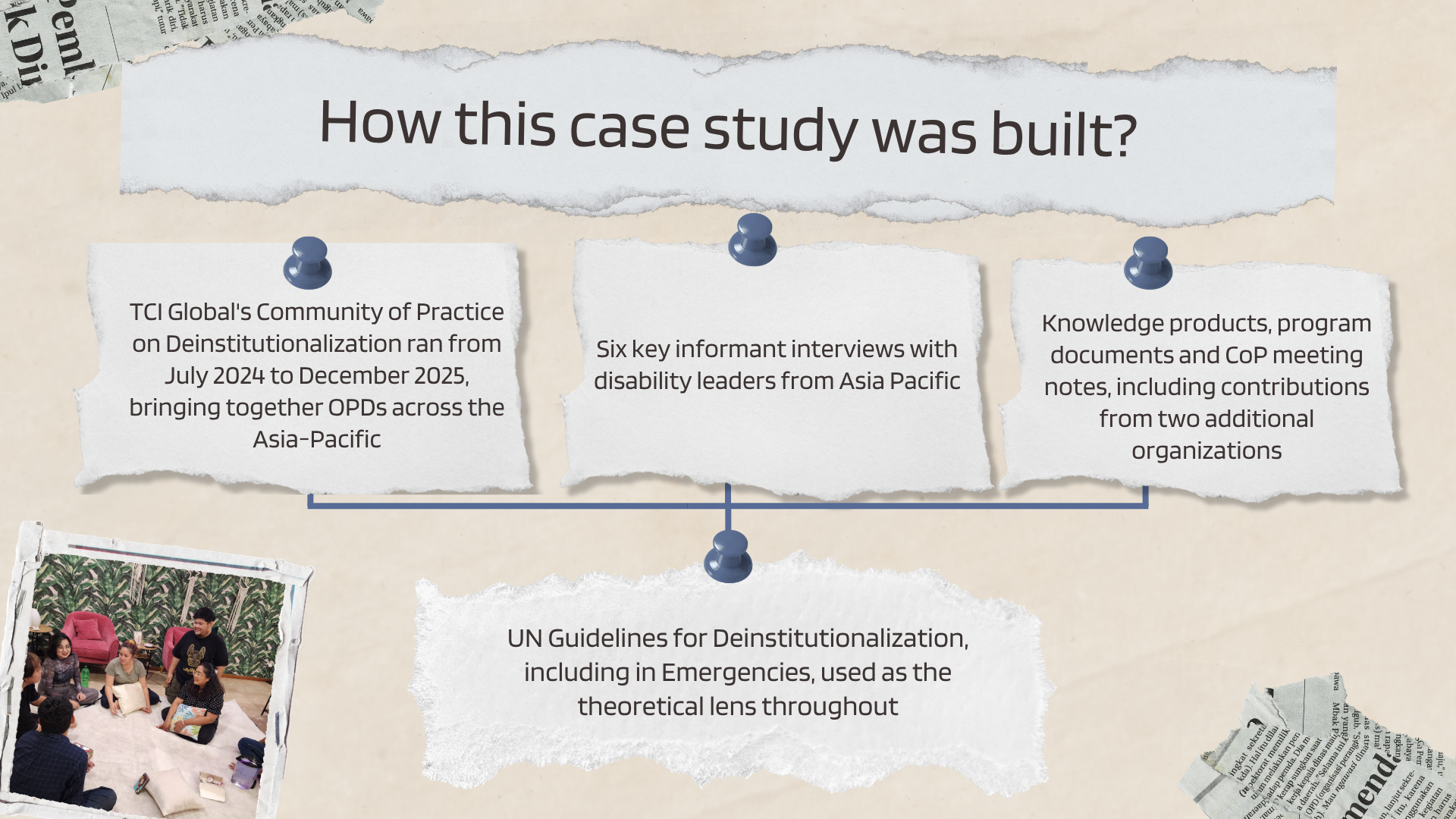
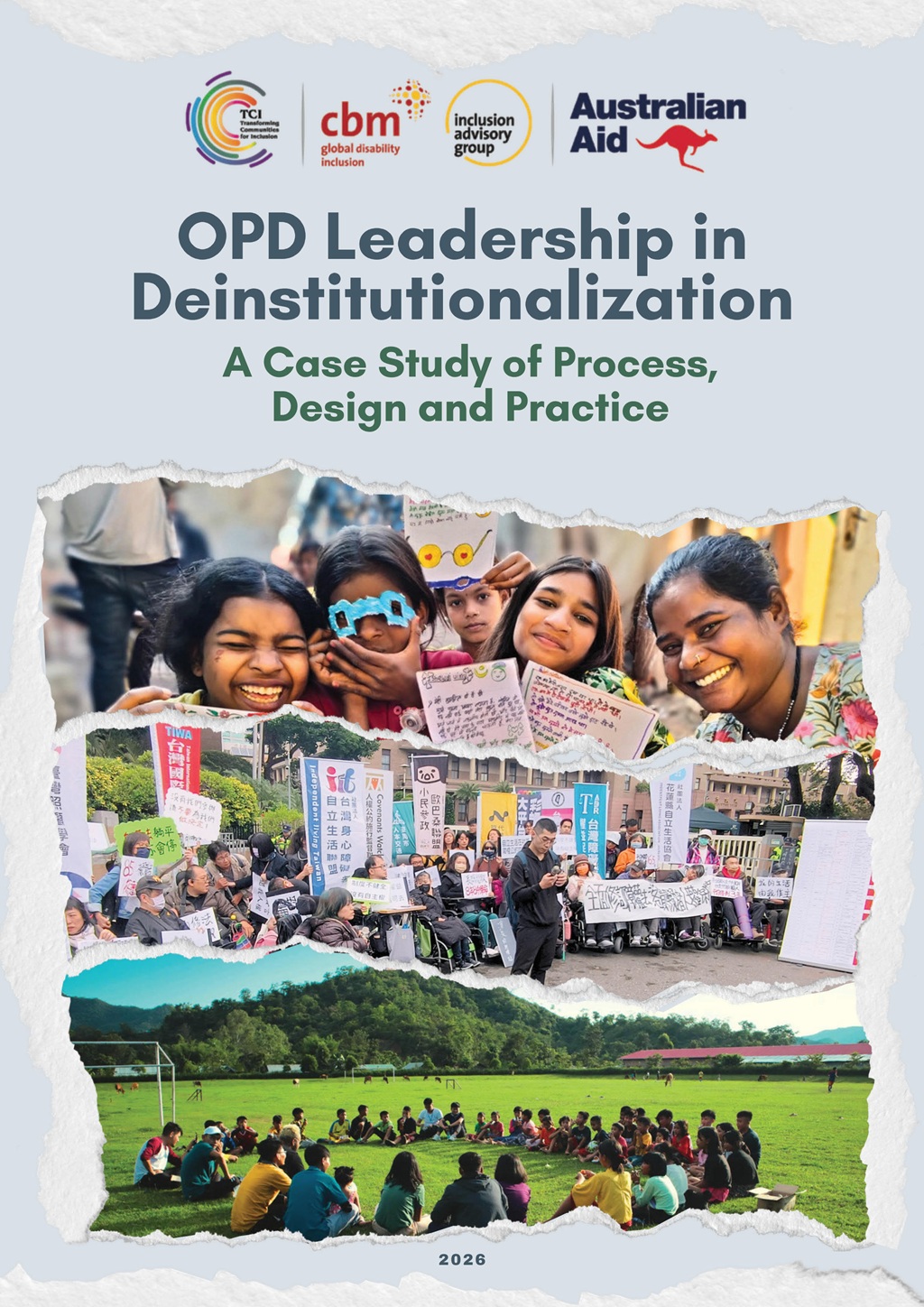
Institutionalization is the loss of choice, control and dignity, and it can happen in a hospital, a shelter, or someone’s own home. That’s the reflection at the heart of OPD Leadership in Deinstitutionalization: A Case Study of Process, Design and Practice, drawn from interviews with disability leaders across Asia-Pacific and two years of TCI Global’s Community of Practice on Deinstitutionalization.
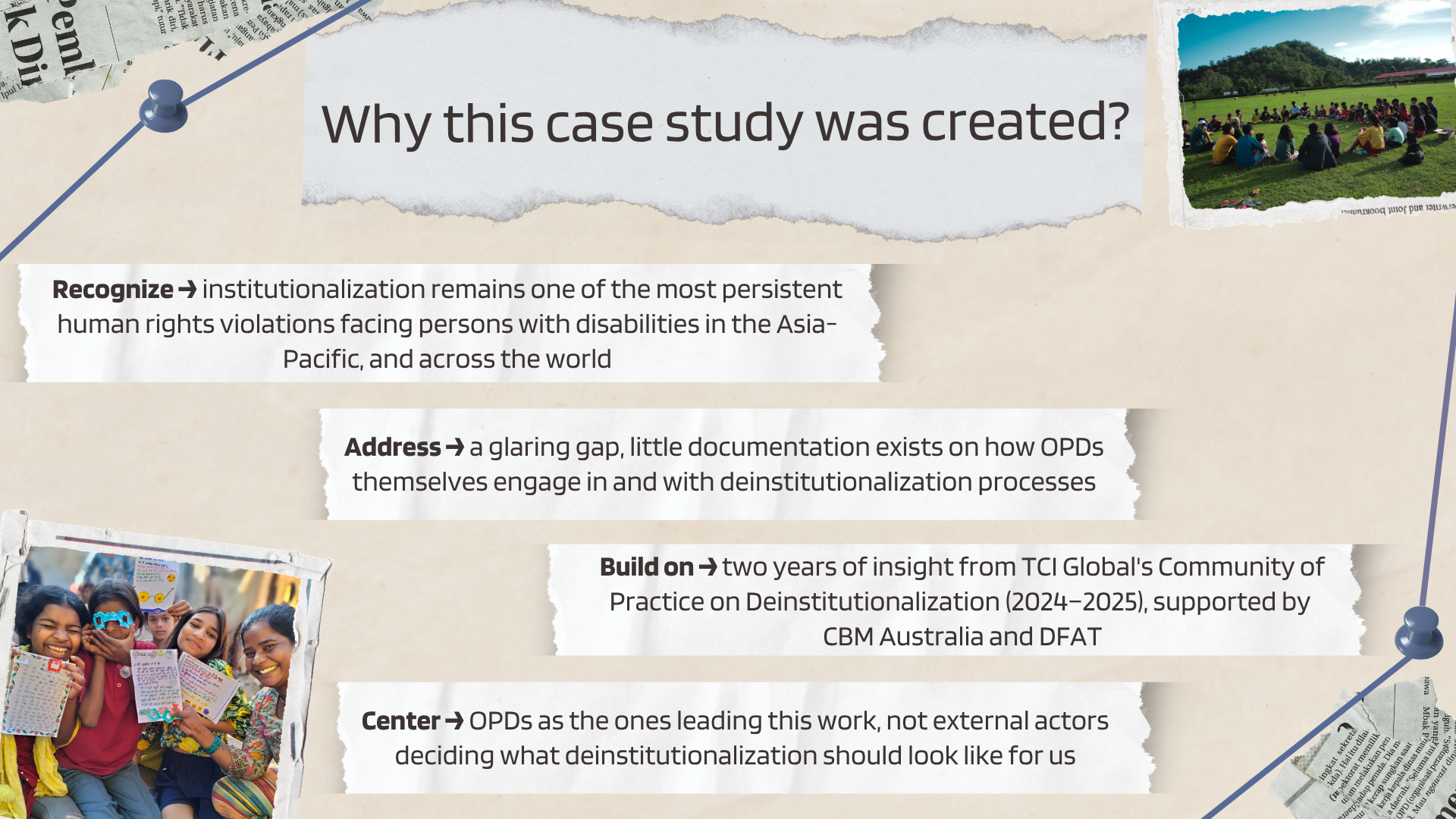
Despite broad ratification of the UN Convention on the Rights of Persons with Disabilities (UNCRPD), institutionalization remains one of the most significant and persistent human rights violations facing people with disabilities in the region. OPDs are at the forefront of advocating for rights-based alternatives, challenging systems that continue to legitimize segregation, coercion, and denial of legal capacity. Yet, until now, there’s been minimal documentation on how OPDs themselves are leading the work to end it.
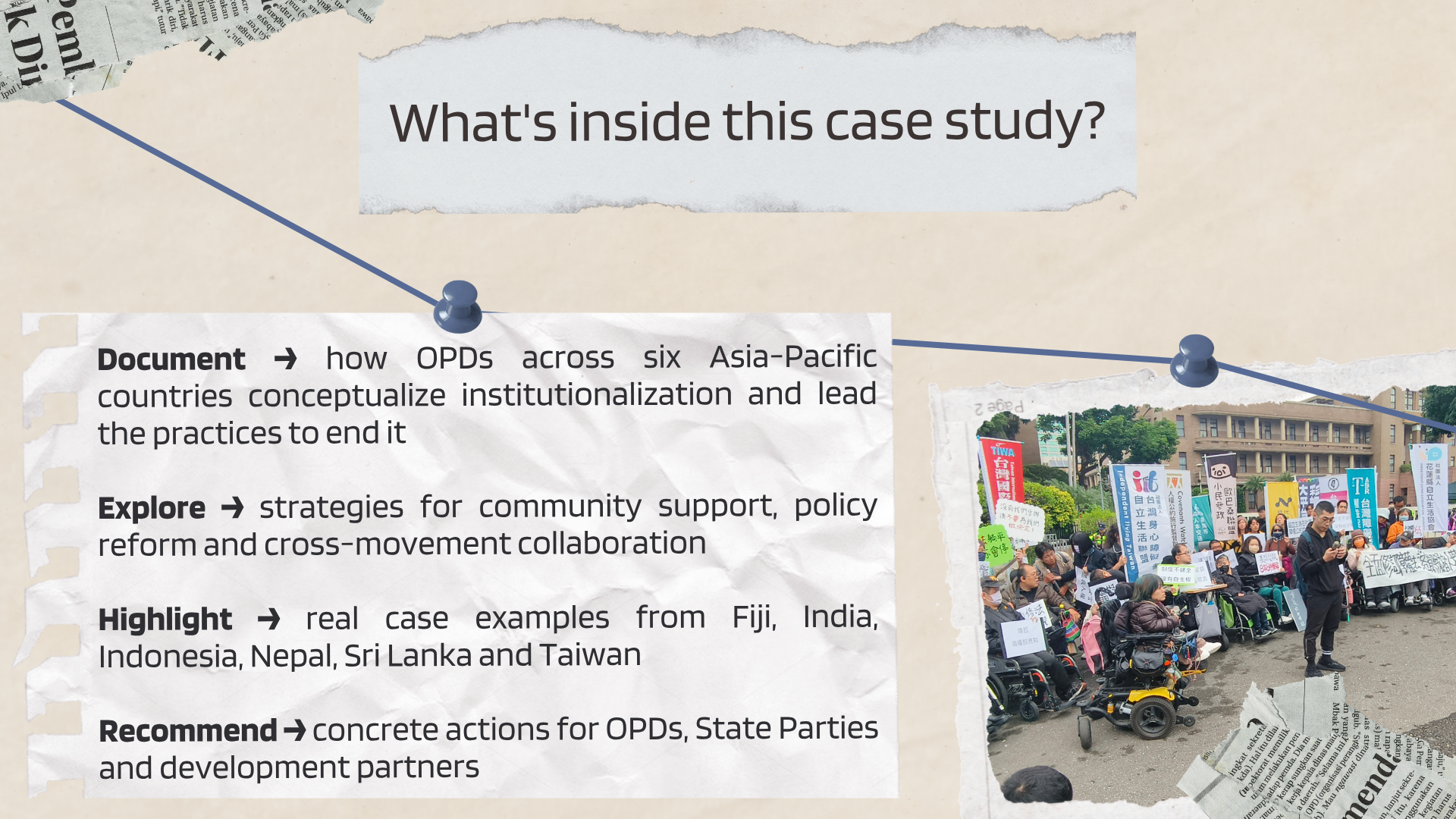
TCI Global, together with CBM Australia and support from the Department of Foreign Affairs and Trade (DFAT), is launching this case study report to document the strategies, challenges, and opportunities shaping OPD-led deinstitutionalization, the barriers OPDs face, what’s actually creating change, and where OPD leadership can be strengthened further. We have created this with the hope that it supports OPDs in sharpening their advocacy with practice-based evidence, learning across contexts, engaging governments and other stakeholders, building alliances across movements, and making the case that community-inclusion models are not hypothetical; they are already being built and led by persons with psychosocial disabilities.