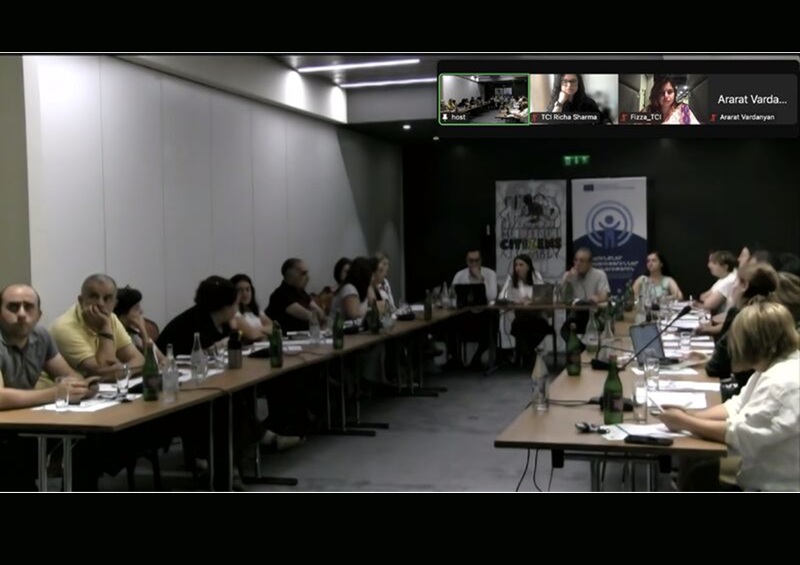
On June 18, TCI Global was invited to present the findings of our report, ‘Restoring Dignity and Autonomy: Global Best Practices as Alternatives to Involuntary Hospitalization and Treatment and Pathways for Reform in Armenia’ at a national stakeholder consultation hosted by Helsinki Citizens’ Assembly-Vanadzor’ (HCAV). It was attended by a wide range of stakeholders such as key ministerial staff, UN agencies, service providers, legal aid actors, CBOs, and NGOs.
The report, commissioned by HCAV, explores Armenia’s mental health system, where coercive practices like involuntary treatment and hospitalization remain widely prevalent owing to outdated legal frameworks, institutional reliance, and long-standing stereotypes regarding our constituency. The report calls for a complete shift toward rights-based, CRPD-compliant systems rooted in community inclusion and upholding legal capacity.
At the consultation, TCI presented some global good practices like peer-led respite centres, rights-based support during crisis, supported decision-making, advance directives, and legal reforms.
Our recommendations included:
- Ending coercion, restoring legal capacity, and
- harmonizing laws with CRPD
- Strengthening independent monitoring mechanisms
- Investing in community support systems and community support services
- Developing a national deinstitutionalization strategy, in line with UN Guidelines on
Deinstitutionalization, including in emergencies
- Raising awareness and shifting public norms
- Fostering multisectoral partnerships and innovation
TCI reiterated that reformist moves that aim to improve institutions or promote ‘least restriction’ only legitimize the bundling of persons under the guise of care, using the power of law. TCI stands firmly for full deinstitutionalization and the right to live and be included in the community on an equal basis with others.
We thank HCAV for commissioning the report and convening this space for dialogue, and we stand in solidarity with the Armenian movement of persons with psychosocial disabilities and civil society groups advocating for rights-based reform.